

In the field of electrical power systems, tap changers play a crucial role in regulating the voltage of transformers. They allow for adjustments to the turns ratio of the transformer, which in turn helps maintain a stable output voltage under varying load conditions. As a tap changer supplier, I often encounter inquiries about alternative devices to tap changers. In this blog post, I will explore the potential alternatives to tap changers and discuss their viability in different scenarios.
Understanding Tap Changers
Before delving into alternatives, it's important to understand what tap changers are and how they work. A tap changer is a device that can change the number of turns in a transformer winding. This is achieved by switching between different taps on the winding, which effectively alters the turns ratio of the transformer. There are two main types of tap changers: on - load tap changers (OLTCs) and off - load tap changers (OLTCs). OLTCs can be operated while the transformer is energized and under load, making them suitable for applications where continuous voltage regulation is required. Off - load tap changers, on the other hand, must be operated when the transformer is de - energized.
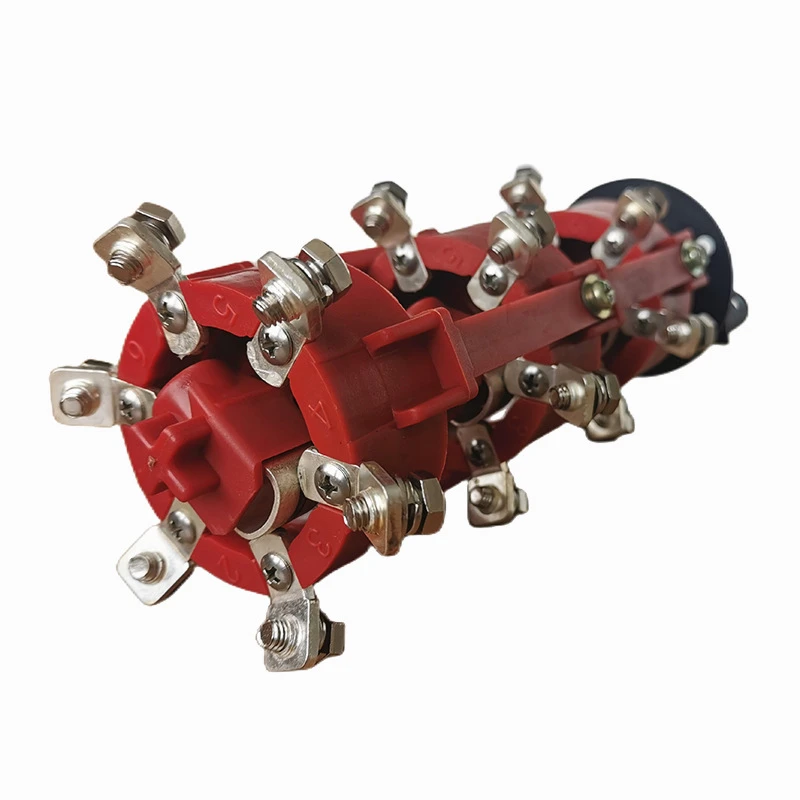
Our company offers a range of high - quality tap changers, such as the Rotatable Three Phase tap changer Oil Immersed, the Oil Immersed Rotatable Single Phase tap changer, and the 3P 5Pos Oil Immersed Rotary Tap Changer. These tap changers are designed to provide reliable voltage regulation in various power system applications.
Potential Alternatives to Tap Changers
Static Voltage Regulators
Static voltage regulators are one of the potential alternatives to tap changers. These devices use power electronics to regulate the voltage. They typically consist of semiconductor switches, such as thyristors or insulated - gate bipolar transistors (IGBTs), and control circuits. Static voltage regulators can provide fast and precise voltage regulation, as they can respond to voltage fluctuations in a matter of milliseconds.
One of the advantages of static voltage regulators is their high efficiency. They do not have the mechanical components that tap changers have, which means there is less wear and tear and lower maintenance requirements. However, static voltage regulators are generally more expensive than tap changers, especially for high - power applications. They also generate more heat, which requires additional cooling systems.
Voltage - Source Converters (VSCs)
Voltage - source converters are another option for voltage regulation. VSCs are power electronic devices that can convert direct current (DC) to alternating current (AC) and vice versa. They can be used to regulate the voltage at the point of connection to the power grid. VSCs offer excellent control capabilities, allowing for precise regulation of voltage magnitude and phase angle.
In addition to voltage regulation, VSCs can also provide other functions, such as reactive power compensation and power flow control. However, similar to static voltage regulators, VSCs are complex and expensive devices. They require sophisticated control algorithms and protection systems, which increases the overall cost and complexity of the installation.
Auto - Transformers with Fixed Taps
Auto - transformers with fixed taps can also be considered as an alternative in some cases. An auto - transformer is a type of transformer that has a single winding with a tap that can be used to change the turns ratio. Unlike tap changers, which can adjust the turns ratio continuously or in multiple steps, auto - transformers with fixed taps have a limited number of pre - set turns ratios.
The advantage of auto - transformers with fixed taps is their simplicity and low cost. They are suitable for applications where the voltage variation is relatively small and the load conditions are relatively stable. However, they lack the flexibility of tap changers, as they cannot adapt to significant changes in load or voltage.
Comparing Alternatives to Tap Changers
When considering an alternative to tap changers, several factors need to be taken into account.

Cost
Cost is often a major consideration in any power system project. Tap changers are generally more cost - effective than static voltage regulators and VSCs, especially for medium - and high - power applications. Auto - transformers with fixed taps are the least expensive option, but they have limited functionality.
Efficiency
Efficiency is another important factor. Tap changers have relatively high efficiency, especially in larger power ratings. Static voltage regulators and VSCs can also have high efficiency, but they may require additional cooling systems, which can reduce the overall efficiency.
Flexibility
Flexibility is crucial in power systems that experience significant load variations. Tap changers offer a high degree of flexibility, as they can adjust the turns ratio in multiple steps. Static voltage regulators and VSCs also provide good flexibility, but auto - transformers with fixed taps have limited flexibility.
Maintenance
Maintenance requirements are also a consideration. Tap changers have mechanical components that require periodic maintenance, such as lubrication and inspection. Static voltage regulators and VSCs have fewer mechanical components, which means lower maintenance requirements. However, they require more sophisticated diagnostic and testing equipment.
Conclusion
In conclusion, while there are several alternatives to tap changers, each option has its own advantages and disadvantages. Static voltage regulators and VSCs offer fast and precise voltage regulation, but they are more expensive and complex. Auto - transformers with fixed taps are simple and cost - effective but lack flexibility.
As a tap changer supplier, I believe that tap changers still offer the best balance of cost, efficiency, flexibility, and reliability for most power system applications. Our range of tap changers, including the Rotatable Three Phase tap changer Oil Immersed, the Oil Immersed Rotatable Single Phase tap changer, and the 3P 5Pos Oil Immersed Rotary Tap Changer, are designed to meet the diverse needs of our customers.
If you are in the market for a reliable voltage regulation solution, I encourage you to contact us to discuss your specific requirements. Our team of experts can provide you with detailed information and help you choose the most suitable tap changer for your application.
References
- Kundur, P. (1994). Power System Stability and Control. McGraw - Hill.
- Grainger, J. J., & Stevenson, W. D. (1994). Power System Analysis. McGraw - Hill.
- Chapman, S. J. (2004). Electric Machinery Fundamentals. McGraw - Hill.