

Current and Potential Transformer
Your Professional Current And Potential Transformer Supplier
Wenzhou Shuowei Electric Co., Ltd. (SUVELL)is a high-tech enterprise specializing in the research, development, production and sales of transformer accessories, switch cabinet accessories, cable accessories, power fittings and transmission line accessories.
Our product portfolio includes pad-mounted transformers, pole-mounted transformers, oil-immersed load break switches, switchgear systems, and switchgear components.
-
![10kV indoor single phase Current Transformer]() 10kV indoor single phase Current TransformerIEC60044-1 Rated voltage:12/42/75kV Rated secondary current:5A or 1A Rated frequency:50Hz or 60Hzread more
10kV indoor single phase Current TransformerIEC60044-1 Rated voltage:12/42/75kV Rated secondary current:5A or 1A Rated frequency:50Hz or 60Hzread more -
![10kv Post Type Potential Transformer with Protective]() 10kv Post Type Potential Transformer with ProtectiveRated voltage: 10kV Extended output With protective class Cast-resin insulated Pole typeread more
10kv Post Type Potential Transformer with ProtectiveRated voltage: 10kV Extended output With protective class Cast-resin insulated Pole typeread more -
![10kV Current Transformer]()
-
![10kv Current Transformer Handcart Tye]()
-
![10kv Current Transformer Differential Protection]() 10kv Current Transformer Differential ProtectionVoltage: 10 kVread more
10kv Current Transformer Differential ProtectionVoltage: 10 kVread more
Differential protection
Enhancement type
Casting resin insulated -
![12kv Post Type Potential Transformer with Protection]() 12kv Post Type Potential Transformer with Protection12kV rated voltageread more
12kv Post Type Potential Transformer with Protection12kV rated voltageread more
Enhancement type
With protection
Casting resin insulated -
![10kV LZZBJ9 Series Voltage Transformer]() 10kV LZZBJ9 Series Voltage TransformerRated Voltage: 10kVread more
10kV LZZBJ9 Series Voltage TransformerRated Voltage: 10kVread more
Enhancement type
With protection
Casting resin insulated -
![10kv Post Type Potential Transformer with Protection]() 10kv Post Type Potential Transformer with ProtectionRated Voltage: 10 kVread more
10kv Post Type Potential Transformer with ProtectionRated Voltage: 10 kVread more
Enhancement type
With protection
Casting resin insulated -
![Combined Three Phase Potential Transformer]() Combined Three Phase Potential TransformerRated voltage: 10 kVread more
Combined Three Phase Potential TransformerRated voltage: 10 kVread more
Resisted ferromagnetic resonance
With residual voltage winding
Casting resin insulated -
![10kv Combined Three Phase Potential Transformer]() 10kv Combined Three Phase Potential TransformerRated voltage: 10kVread more
10kv Combined Three Phase Potential TransformerRated voltage: 10kVread more
Five-pole type
Casting resin insulated
Three phase -
![10kv Combined Potential Transformer]() 10kv Combined Potential TransformerRated voltage: 10kVread more
10kv Combined Potential TransformerRated voltage: 10kVread more
Five-pole type
Casting resin insulated
Three phase -
![3kv Potential Transformer]() 3kv Potential TransformerRated voltage: 10kVread more
3kv Potential TransformerRated voltage: 10kVread more
With operating power
Casting resin insulated
Single phase


Why Choose us
Quality Assurance
The company is equipped with comprehensive production facilities and a robust testing system to ensure that all products meet international standards and satisfy customer requirements.
Professional Solution
With extensive experience and personalized one-to-one service, we are capable of assisting you in selecting suitable products and providing professional answers to technical inquiries.
Reasonable Price
Supported by a dedicated procurement and cost-control team, we strive to minimize production costs and optimize profit margins in order to offer you competitively priced solutions.
Parameter

Current transformer have many advantages, including:
Accuracy High Precision: Current transformers are known for their exceptional accuracy in measuring current. They provide reliable and precise readings even under varying load conditions.
Safety Isolation: CTs provide electrical isolation between the primary circuit (high current side) and the secondary circuit (low current side). This isolation enhances safety by preventing high currents from reaching measuring and monitoring equipment.
Wide Range of Applications Versatility: Current transformers are suitable for a wide range of applications, from protecting electrical equipment to monitoring power consumption in industrial processes and renewable energy systems.
Reliability Durability: CTs are robust and designed for long-term use. They can withstand harsh environmental conditions and continue to provide accurate measurements.
Easy Installation Simplicity: Current transformers are relatively easy to install and maintain, making them accessible to a broad range of users.

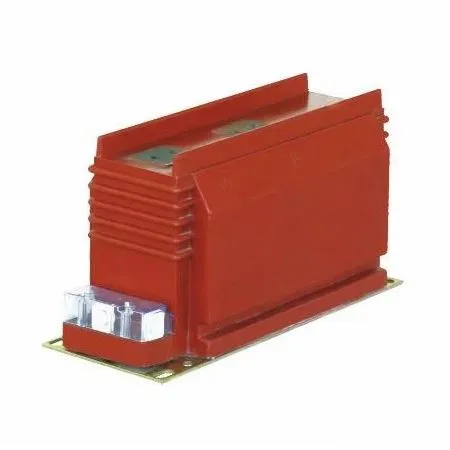
Potential transformer have many advantages, including:
Safe Voltage Measurements: Potential transformers provide a means to safely measure high voltages by stepping them down to manageable levels. This reduction is vital in preventing accidents and ensuring that voltages can be accurately monitored with standard measuring equipment.
Protection against Electrical Hazards: By facilitating safe measurements, potential transformers help to mitigate the risks associated with high-voltage electricity. They prevent direct exposure to hazardous voltages, thereby protecting both personnel and equipment from potential electrical faults and failures.
Accurate Voltage Measurement: In industrial environments, accuracy in voltage measurement is crucial for the optimal performance and protection of electrical systems. Potential transformers are engineered to deliver high precision in such measurements.
The Working Principle Of Current And Potential Transformers
Firstly in potential transformer connections, a higher voltage primary circuit is supplied with the primary winding. As current passes through this winding, a magnetic field is generated within the core of the transformer. In this case, the magnetic field induces a voltage in the secondary winding.
In the situation of an autotransformer, we calculate the resultant voltage by looking at the turns ratio of primary to secondary (the greater the windings in the primary coil, the less the voltage). To illustrate, a 10:1 ratio in windings means a voltage of 10,000V will result in only 1,000V on the secondary coil.
The secondary coil (depending on the reduced voltage) feeds into circuits containing voltmeters or relays. So in practice, large voltages can be measured without worrying too much about the risks of direct contact.
A current transformer (CT) is a very important electrical component that is used to measure the current in an electrical circuit. You can think of it as a transformer that is specifically designed to measure current instead of voltage.
Current transformers work by taking a small sample of the current in the circuit and transforming it into a voltage. This voltage is then measured by a voltmeter and used to calculate the current in the circuit.
Current transformers are often used in conjunction with voltage transformers to create a complete transformer assembly. This assembly is then used to measure the voltage and current in an electrical system.
Well, the primary (or input) side of the transformer is connected to the source of the current that you want to measure. The secondary (or output) side is connected to the meter. When current flows through the primary side, it induces a current in the secondary side. This induced current is what is measured by the meter.
Before using any current transformer, it’s important to understand its proper installation considerations. This is because improper installation may lead to a wide range of problems, including inaccurate readings and potentially unsafe conditions.
To prepare for the installation process, make sure to read the instructions carefully and check the device for any electrical or structural defects. Also, it’s essential to consider the nominal power of the current transformer so that it is matched with a compatible circuit breaker.
Additionally, pay attention to the rated primary current of the device; it should match with other equipment connected in series and parallel in order to ensure properly combined measurement accuracy. When installing multiple current transformers, make sure they are located away from each other so that their magnetic fields do not interfere with each other.
By paying attention to these key factors during installation, you can ensure that your current transformer works correctly and provides accurate readings.

Additional Information
|
Shipping |
We offer various shipping methods, including sea freight, air freight, and express delivery, depending on the order size and destination. |
|
Terms Of Payment |
We usually accept T/T, L/C, Paypal, Credit card, etc. If you prefer other payments terms, please feel free to discuss with us. |
FAQ
Wenzhou Shuowei Electric Co., Ltd. is one of the most professional current and potential transformer manufacturers and suppliers in China, specialized in providing high quality customized service. We warmly welcome you to wholesale bulk current and potential transformer in stock here from our factory. Contact us for quotation.