

A tap changer is a crucial component within power transformers, which plays a vital role in maintaining a stable output voltage under varying load conditions. As a leading tap changer supplier, we understand the significance of how tap changers respond to sudden load changes and the technical details behind this essential function.
Principles of Tap Changer Operation
Before delving into how tap changers respond to sudden load changes, it is essential to understand the basic principles of their operation. A tap changer allows for the adjustment of the transformer's turns ratio by changing the connection point on the transformer winding. By altering the number of turns in use, the output voltage of the transformer can be regulated.
There are two main types of tap changers: on - load tap changers (OLTCs) and off - load tap changers (OLTCs). On - load tap changers are designed to change taps while the transformer is energized and under load, which is essential for continuous power supply and voltage regulation. Off - load tap changers, on the other hand, require the transformer to be de - energized before tap changes can be made.
Response to Sudden Load Changes
Detection of Load Changes
When a sudden load change occurs, the first step for a tap changer to respond is to detect the change in the electrical parameters, typically the voltage at the transformer output. Voltage sensors are installed at the appropriate points in the power system to monitor the output voltage. When a sudden increase or decrease in load occurs, the output voltage will deviate from the set value.
For example, when there is a sudden increase in load, the power demand rises. According to Ohm's law and the principles of power transmission, the voltage drop across the transformer and the associated power lines will increase, resulting in a decrease in the output voltage. The voltage sensors detect this drop and send a signal to the tap changer control system.
Control System Decision - Making
Once the control system of the tap changer receives the signal indicating a voltage deviation, it analyzes the magnitude and direction of the change. Advanced control algorithms are used to determine whether a tap change is necessary. The control system takes into account factors such as the rate of voltage change, the magnitude of the deviation from the set voltage, and the stability of the power grid.
If the voltage deviation exceeds a pre - set threshold, the control system decides to initiate a tap change. In some sophisticated tap changers, the control system can also predict future load changes based on historical data and real - time grid conditions, enabling proactive tap adjustments.
Tap Changing Process
When the decision to change taps is made, the on - load tap changer starts the tap - changing procedure. There are several mechanisms for tap change, such as resistor - type and reactor - type. In a resistor - type on - load tap changer, during the tap - changing process, a resistor is temporarily inserted between the old and new taps to limit the current flow and prevent arcing.
As the load changes suddenly, the tap - changing process needs to be fast and reliable to minimize the voltage fluctuation. The tap changer switches from the current tap to a new tap in a sequential manner. For example, if the voltage is too low due to a sudden increase in load, the tap changer will increase the number of turns in the winding, thereby increasing the output voltage.
Impact of Different Types of Tap Changers on Response
Oil Immersed Rotatable Single Phase tap changer
Our Oil Immersed Rotatable Single Phase tap changer is designed for single - phase transformers. It offers excellent performance in responding to sudden load changes. The oil - immersed design provides good insulation and cooling properties, ensuring the reliability of the tap - changing operation.
The rotatable mechanism allows for smooth and precise tap changes. When a sudden load change occurs in a single - phase power system, this tap changer can quickly adjust the turns ratio, maintaining a stable output voltage. The control system of this tap changer is optimized to detect and respond to voltage changes rapidly, minimizing the impact of load fluctuations on the power supply.
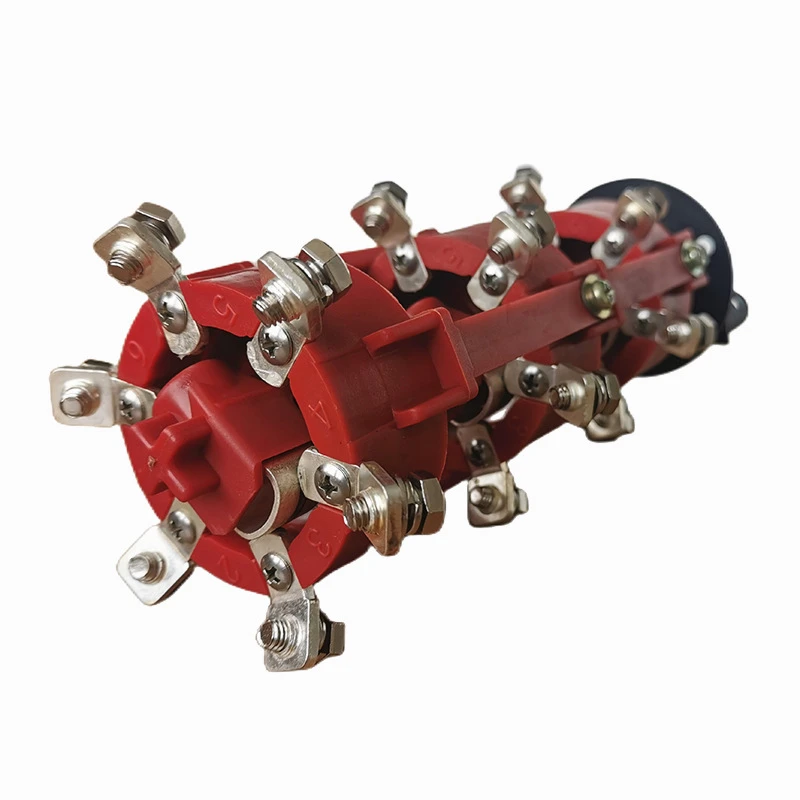
3P 5Pos Oil Immersed Rotary Tap Changer
The 3P 5Pos Oil Immersed Rotary Tap Changer is suitable for three - phase transformers. In a three - phase power system, sudden load changes can be more complex due to the interaction between the phases. This tap changer is designed to handle such situations effectively.
With five positions, it provides a range of turns - ratio adjustments. The oil - immersed rotary mechanism ensures smooth and reliable tap changes. The control system of the 3P 5Pos tap changer is capable of coordinating the tap changes in all three phases simultaneously, maintaining the balance and stability of the three - phase power supply during sudden load variations.
Rotatable Three Phase tap changer Oil Immersed
Our Rotatable Three Phase tap changer Oil Immersed offers high - performance voltage regulation for three - phase power systems. It combines the advantages of the oil - immersed design and the rotatable mechanism.
When facing sudden load changes, this three - phase tap changer can quickly and accurately adjust the turns ratio in each phase. The control system is equipped with advanced algorithms to optimize the tap - changing process, ensuring minimal voltage fluctuation and stable power supply to the connected loads.
Factors Affecting the Response of Tap Changers
Tap - Changing Speed
The speed at which a tap changer can change taps is a critical factor in responding to sudden load changes. Faster tap - changing speeds allow the tap changer to quickly adjust the output voltage, reducing the duration of voltage deviation. However, the tap - changing speed is also limited by factors such as the mechanical design of the tap changer and the electrical characteristics of the power system.
Control System Accuracy
The accuracy of the tap changer control system determines how precisely it can detect voltage changes and initiate tap changes. A more accurate control system can make better decisions on whether to change taps and which tap to switch to, resulting in more effective voltage regulation.

Mechanical and Electrical Wear
Over time, the components of the tap changer, such as the contacts and the moving parts, will experience mechanical and electrical wear. This wear can affect the performance of the tap changer, including its response to sudden load changes. Regular maintenance and inspection are necessary to ensure the optimal operation of the tap changer.
Importance of Proper Tap Changer Response
A tap changer that can respond effectively to sudden load changes is essential for the reliable operation of power systems. Stable output voltage is crucial for the proper functioning of electrical equipment. Sudden voltage fluctuations due to load changes can damage sensitive electronic devices, disrupt industrial processes, and cause inconvenience to consumers.
By quickly adjusting the output voltage in response to load changes, our tap changers help maintain the power quality in the grid. This not only improves the reliability of the power supply but also reduces the risk of equipment failures and downtime, which is beneficial for both power utilities and end - users.
Contact for Purchase and Technical Consultation
If you are interested in our high - quality tap changers and want to discuss your specific requirements, we welcome you to contact us for procurement and technical consultations. Our team of experts is ready to provide you with detailed information and solutions tailored to your needs. Whether you need a single - phase or three - phase tap changer, we have the right products to meet your demands.
References
- Electric Power Systems, by Stevenson Jr., W. D.
- Power Transformer Engineering, by Badrul H. Chowdhury and Nazrul Haque